
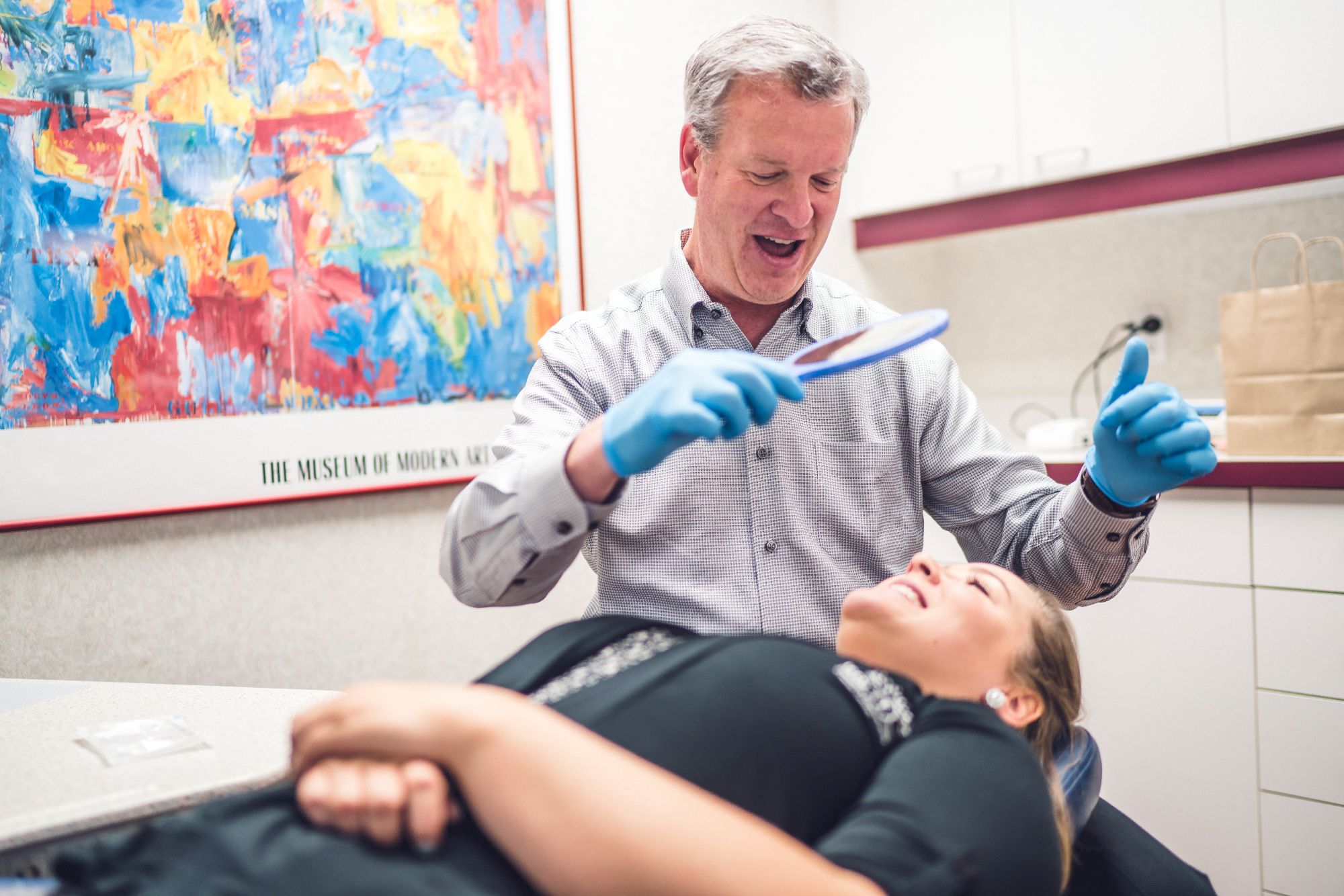
An iTero digital scanner is a handheld wand that captures thousands of 3D images of your teeth and gums, building a precise digital replica of your bite right on the screen. It replaces putty impression trays entirely, and the FDA-cleared scan is used to plan Invisalign, design retainers, and simulate your finished smile.
The reason it matters comes down to something simple: better records lead to a better fit, fewer surprises, and less back-and-forth once treatment begins. Instead of biting into a tray of cold material and holding still while it sets, you sit comfortably while the wand glides along your teeth. No gagging, no mess, no do-overs because a tray shifted halfway through. If you had impressions taken years ago and still remember counting the seconds until the tray came out, this is a very different appointment.
The scan itself is a digital file, which changes what happens next. Your model can be sent to the Invisalign lab in minutes, opened by our doctor at any point during treatment, and compared against newer scans to see exactly how far your teeth have moved. Traditional alginate and PVS impressions produced stone models that lived in a drawer and could chip, warp, or go missing. Digital records don’t.
At Great Lakes Bay Orthodontics, the 3D iTero digital scanner is part of how we build accurate records for children, teens & adults from the very first visit. That first scan does a lot of quiet work behind the scenes: it sets the baseline our doctor measures everything against, it feeds the software used to map out your treatment, and it stays on file long after your last appointment in case you ever need it again.
How the iTero Scanning Process Works, Step by Step
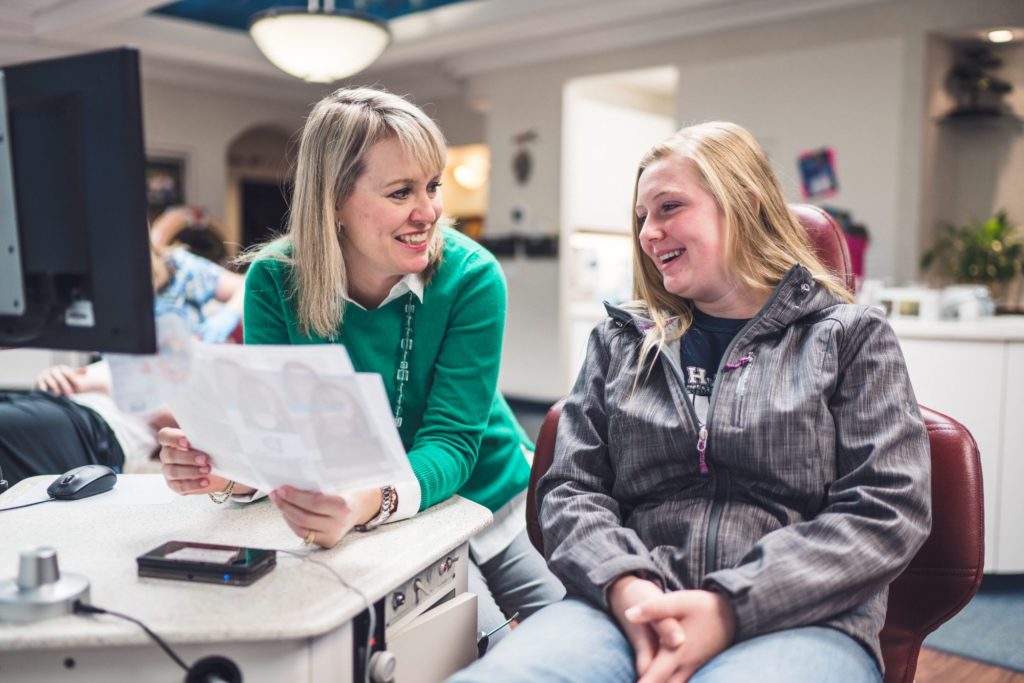
An iTero scan takes about five to ten minutes and follows the same sequence every time: your upper arch, your lower arch, and then your bite. A team member guides a small wand over your teeth while a 3D model builds on the screen beside you. No trays, no putty, no waiting for material to set.
Here’s what to expect from start to finish:
- We talk through your goals first. A team member asks what you’d like to change about your smile, then fits the wand with a fresh disposable sleeve for your appointment.
- The wand moves over your upper arch. It travels along the outside, the biting surfaces, and the inside of your teeth in a set pattern. You can swallow, breathe, and take a break whenever you need one.
- Your lower arch and bite come next. You’ll close together naturally so the scanner can record how your upper and lower teeth meet, which tells us a great deal about your bite.
- You watch the 3D model build in real time. This part surprises people. Your teeth appear on the monitor as the wand moves, rotating in full color, and you can see crowding, spacing, or wear from angles a mirror never shows you.
- The software checks its own work. If a spot is missing data, the program flags it and we rescan that small area in a few seconds. There’s no need to start over.
- The file uploads securely. Your scan goes to treatment planning software or straight to the aligner lab, usually before you’ve left the chair.
That’s it. Kids handle it easily, and adults who dreaded the old putty impressions tend to be the most relieved.
Why an iTero Digital Scanner Matters for Your Treatment: Key Benefits for Patients
Digital scanning changes the experience for you and the accuracy of the records our doctor works from. Both matter.
- Comfort. No trays, no thick material pressed against the roof of your mouth, no gag reflex to fight, no sitting still while something sets. You can pause any time.
- Accuracy. Impression material can pull, tear, or distort slightly as it’s removed, and a small distortion becomes a poorly fitting aligner. Digital capture avoids that kind of error, so you get fewer remakes and fewer delays before your first tray arrives.
- Speed. Files transmit electronically in minutes. Physical models had to be poured, boxed, and shipped, adding days to the front end of treatment.
- Visualization. Outcome simulation software can show a projected before-and-after of your smile at the free consult, so you’re deciding with a picture in front of you instead of a description.
- Progress tracking. Your first scan becomes a baseline. Later scans can be overlaid against it to show how teeth have moved, and to catch wear, recession, or a tooth that isn’t tracking with its aligner.
- Records that last. Digital files don’t chip, warp, or get misplaced. Years after your debond appointment, your model is still there if you need a replacement retainer.
Digital intraoral scans create a permanent, retrievable 3D record of a patient’s bite that can be compared against future scans to measure tooth movement over time, something stone models were never able to do reliably.
Dr. Grillo is certified by the American Board of Orthodontics and has completed over 4,000 Invisalign cases, and accurate digital records are the foundation under every one of those plans. Smarter technology is something we put real weight on here, and the scanner is a straightforward example of what that looks like on an ordinary weekday afternoon: less mess for you, cleaner data for our doctor, and a shorter wait between your first appointment and your first aligner tray.
iTero Scan vs. Traditional Impressions
Both methods aim to record the same thing: an exact copy of your teeth and bite. How they get there is where the experience splits.
| What matters | iTero digital scan | Traditional impressions |
|---|---|---|
| Comfort | Nothing sets in your mouth; pause any time | Tray and material held in place while it hardens |
| Chair time | Typically five to ten minutes, continuous capture | Several minutes of set time per arch, plus re-takes |
| Gag reflex | Rarely an issue | Common trigger for sensitive patients |
| Accuracy | No pull or tear distortion; software flags missing data | Material can shift, tear, or distort on removal |
| Fixing an error | Rescan a small area in seconds | Retake the full arch with new material |
| Getting it to the lab | Uploads electronically in minutes | Poured, packed, and shipped by courier |
| Storage | Digital file, retrievable for years | Stone model that can chip, warp, or be misplaced |
| Seeing your smile | Rotating 3D model and outcome simulation on screen | Plaster model only |
A quick honest note: traditional records still have a place. Certain restorative situations, unusual anatomy, or specific lab requirements can call for a physical impression, and our doctor will tell you plainly if your case is one of them. For orthodontic planning, Invisalign, and retainers, the 3D iTero digital scanner handles the vast majority of what we need.
Does an iTero Scan Add to the Cost of Treatment?
An iTero scan is typically included in your diagnostic records or your free consult, not billed as a separate line item. What records cost overall depends on case complexity, whether imaging is bundled in, and the type of treatment you’re considering. Ask what’s included before you start, and you won’t be caught off guard later.
A few things worth understanding about scanning and cost:
- Repeat scans are usually part of your care. If you need a mid-course refinement, a new retainer, or updated records after growth, rescanning is typically folded into your existing agreement.
- Digital accuracy can save money later. Aligner remakes and poorly fitting retainers cost time and sometimes dollars. Cleaner records mean fewer of both.
- Insurance treats it as records. Diagnostic records are generally handled as part of orthodontic treatment rather than as a standalone item, and payment arrangements at Great Lakes Bay Orthodontics can spread that across your treatment.
The clearest way to get a real number for your situation is to come in and ask. Your free consult includes a conversation about what your case actually requires, with no guessing from a price chart online. You’ll leave knowing what your treatment involves, what it would cost, and how payments can be arranged, which is a far more useful answer than anything a search result can hand you.
Who Is a Good Candidate for an iTero Scan?
Nearly everyone. Children, teens & adults starting orthodontic treatment can be scanned comfortably, and there’s no age or health requirement that rules people out.
Digital scanning is an especially good fit if you:
- Have a strong gag reflex. If putty impressions were the worst part of past visits, this is the single biggest change you’ll notice.
- Are considering Invisalign. Scan data feeds directly into the aligner design and the outcome simulator, so you can see a projected smile before committing.
- Need a retainer replaced. A stored scan often means a new retainer without a new appointment for records.
- Are being monitored between visits. Baseline scans pair well with dental monitoring, letting our doctor check progress from your smartphone photos against your 3D model.
- Already wear braces. Brackets and wires simply require a slightly adjusted scanning technique, not a different method.
- Have crowns, bridges, or implants. These scan well; we just take a little extra care around restoration margins.
According to the American Association of Orthodontists, children should have their first orthodontic checkup around age seven, and a digital scan at that visit gives our doctor a growth baseline to compare against year after year. Talk with our doctor about exactly which records your case needs, since not every patient requires the same set.
Your teeth are as unique as your fingerprint, and the records we start with should reflect that. Scanning is quick, comfortable, and included in the conversation from your very first visit, so if you’re curious what your own bite looks like in full color and rotating on a screen, schedule your free consult and start the smile of your dreams today. Dr. Grillo, certified by the American Board of Orthodontics, will walk you through the scan itself and what it means for the options in front of you.
Frequently Asked Questions About iTero Digital Scanners
Does an iTero scan hurt?
No. The wand rests lightly along your teeth and never presses or pinches, and there’s no material involved at all. Most patients describe it as a camera moving around their mouth. You can stop, swallow, or take a breath whenever you’d like, which is something impression trays never allowed.
How long does an iTero scan take?
Usually five to ten minutes for a full set of upper and lower arches plus your bite. First-time scans on a very crowded bite can run slightly longer, and quick partial rescans during treatment take only a minute or two. Total appointment time is generally shorter than an impression visit because there’s no material to mix, set, or retake.
Does the iTero scanner use radiation?
No. The scanner captures optical images using visible light and laser reflection, not X-rays. That means there’s no radiation exposure and no limit on how often you can be scanned, which is part of why it works so well for tracking tooth movement over months of treatment.
Is an iTero scan more accurate than a putty impression?
Digital scanning removes the most common sources of error in traditional impressions: material distortion, tearing, and shifting as the tray comes out. The software also checks its own capture and prompts a rescan of any incomplete area before you leave. In practice, that means better-fitting aligners and retainers and fewer remakes.
Can iTero show what my teeth will look like after treatment?
Yes. Outcome simulation software uses your scan to generate a projected before-and-after view of your smile, which you can see on screen at your free consult. It’s a projection rather than a guarantee, since every mouth responds a little differently, but it gives you a realistic picture of where treatment is headed.
Do I need a new scan if I lose my retainer?
Often not. If your scan is on file and your teeth haven’t shifted much, our doctor can frequently order a replacement retainer from your stored digital model. If it’s been a while or your teeth have moved, a fresh scan takes just a few minutes.